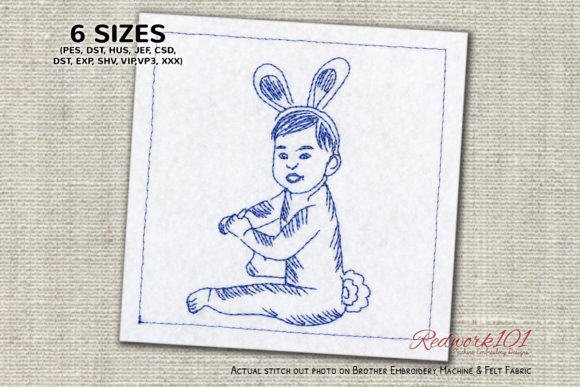
Adorable Girl Wearing Bunny Ears Redwork
As I unpacked the Adorable Girl Wearing Bunny Ears Redwork machine embroidery design, I immediately thought of my upcoming spring craft fair booth. I’m always looking for designs that are cute, commercial, and quick to stitch out. This one fits the bill perfectly. The redwork style gives it a classic, farmhouse feel that is incredibly popular right now. The optional box stitch means I can decide whether to frame it or leave it open, depending on the product. For any embroidery business owner or Etsy seller preparing for a handmade market, this is a design worth evaluating carefully.
First Impressions: Cute, Classic, and Craft Fair Ready
The first thing I noticed was the charming simplicity. A little girl with bunny ears is an image that resonates with a wide audience, from grandparents to young parents. The redwork style—typically stitched in a single bold red thread color—means the design reads clearly from across a booth. It’s not overly complex, which is a huge plus for batch production. The optional box stitch offers a nice framing device, but I’ll need to test whether adding it enhances the design or just adds extra stitch time. As noted in the design description, the box color may vary, so I will verify the thread colors in the actual embroidery file. For a craft fair product, where margins matter, sometimes less is more.
Best Product Matches for This Design
When I evaluate a new embroidery file, I immediately think about which products in my booth will showcase it best. Here is where Adorable Girl Wearing Bunny Ears Redwork truly shines:
- Tote Bags and Market Bags: A natural canvas tote bag is the perfect canvas for this design. The redwork pops beautifully against natural, cream, or light gray fabric. It’s a fast-moving product category for any craft fair product lineup.
- Aprons: This design screams "bakery apron." It would look adorable on a waist apron or a full bib apron. Customers will instantly imagine themselves baking Easter cookies. This is a strong apron embroidery option.
- Tea Towels and Kitchen Linens: This is where redwork traditionally shines. A set of tea towels with this design makes an excellent, affordable gift. I would definitely stitch a few of these for my booth. High-quality tea towel embroidery sells itself.
- Pillow Covers: A lumbar pillow or a 12x12 pillow cover with this design fits perfectly into the farmhouse decor niche. It’s a high-value item that feels premium and giftable.
- Embroidered Patches: This is a brilliant idea. Stitching this design as a patch on water-soluble stabilizer creates a high-margin, low-effort product. Customers can iron them onto jackets, bags, or jeans. A great embroidered patch item.
- Fabric Pouches and Giftables: Small zip pouches, cosmetic bags, or pencil cases. The design is a perfect size for these items and adds a ton of perceived value. Perfect for a small shop product.
- Caps and Hats: I would be cautious here. The design might be too detailed for a curved cap surface. I would need to significantly reduce the size, which might cause the delicate lines to lose their clarity. Always test on a scrap cap first.
Production Notes for the Experienced Embroidery Business Owner
Before I commit to producing dozens of finished products for a weekend market, I run through my production checklist. Here is what I’m considering for Adorable Girl Wearing Bunny Ears Redwork:
Stitch Density and Sew-Out Time
Redwork is generally very low stitch density. This means fast sew-outs and less thread usage. Perfect for keeping costs down for a craft fair. I need to verify the exact stitch count in the digital embroidery file to estimate production time accurately. Low density also means less risk of puckering on lightweight fabrics.
Size and Hoop Size
Knowing the finished size of the design is critical. I need to check if it fits my standard 4x4 or 5x7 hoop size. If I skip the optional box stitch, the design might be smaller and require less hoop space, which is great for those small pouches and caps. I will always advise checking the design assets before purchasing to ensure compatibility with your machine.
Fabric and Stabilizer Strategy
For towels and canvas, a medium-weight cutaway stabilizer is my go-to. For patchwork, I’ll use a water-soluble stabilizer. For delicate fabrics, a tear-away might work, but I always prefer cutaway for stability. The fabric texture matters a lot here. Smooth cotton or linen will show the crisp lines of the redwork best. Heavily textured fabrics might cause the fine details to look muddy.
Thread Colors and Contrast
The redwork style usually uses a single color. I plan to use a bright, bold red to maximize contrast. I will also test a black or dark blue version to see if it appeals to niche customers. I will test the thread colors against the exact fabric colors I plan to use. Avoid using red on dark red fabric—the design will completely disappear.
The Optional Box Stitch
I need to decide if I will use the box stitch or not. For a clean, modern look, I might skip it. For a more traditional, framed look, I might add it. For batch production, I will stick to one version to ensure consistency across all my handmade product items. The description mentions the box is a different color in most designs, so I will check the actual file to see if it matches the redwork or uses a separate color.
Selling at a Craft Fair: Display and Customer Engagement
At a busy craft fair product booth, you need designs that grab attention. Adorable Girl Wearing Bunny Ears Redwork does exactly that.
- Visual Impact: The red color is a magnet for the eye. I will display the embroidered items on a crisp white tablecloth with some faux greenery or Easter eggs to create a seasonal vignette. This design naturally fits an Easter theme, but it works for spring markets in general.
- Photography: This design is a dream to photograph. The high contrast of redwork means it looks great in Etsy seller listing photos and social media posts. I can easily create lifestyle shots with a tea towel draped over a cutting board. Good printable mockup options are available online, but I always prefer a real photo of the finished product.
- Batch Production: Because the design is simple and uses few thread colors, I can easily produce 20-30 quality items in a single weekend. This is crucial for keeping a sturdy inventory for a craft fair. Repeatable designs are a godsend for small shop product consistency.
- Target Audience: I will pitch this to customers looking for unique Easter decorations, hostess gifts, or spring home accents. It’s also a perfect gift for a new baby or a young child. The cute factor is real, and it drives impulse buys.
Designer’s Checklist Before You Hit “Start”
Before I produce a single item for the booth, I will run through my standard checklist. As an experienced embroidery designer, I never skip these steps:
- Test on Scrap: I will stitch the Adorable Girl Wearing Bunny Ears Redwork design on a scrap piece of fabric to check the tension, stitch quality, and size. This is non-negotiable.
- Check Thread Contrast: I will test the red thread against the exact fabric colors I plan to use. Redwork relies entirely on contrast for its charm.
- Review Spacing: I will examine the spacing between the main design and the optional box. I need to ensure the box isn't too close or too far from the central figure.
- Confirm Hoop Size: I will verify the design fits my chosen hoop size with room to spare. Nothing ruins a batch run like a design that doesn't fit the hoop.
- Inspect Stitch Quality: I will check the file for any overly dense areas that might cause puckering on lightweight fabrics. Redwork is usually safe, but it's always good to verify.
- Create a Real Mockup: I will photograph the finished test item on a real product to see how it looks in a real-world setting. This helps with booth display planning.
- Compare Fabric Colors: The design will look different on a natural linen towel versus a bright white apron. I will compare to see which sells best at my market.
- Confirm Commercial Licensing: I will always double-check the commercial embroidery licensing agreement for the digital embroidery file to ensure I am allowed to sell finished products made from it. Never skip this step, fellow Etsy sellers and boutique makers. It protects your business.
Final Verdict for the Handmade Market
The Adorable Girl Wearing Bunny Ears Redwork design is a strong contender for my spring craft fair lineup. It’s cute, practical, and has a classic appeal that resonates with a broad audience. The redwork style ensures fast production and high visual impact. If you’re an embroidery business owner looking for a versatile, sellable design for your next handmade market, this one is definitely worth a closer look. Just remember to do your due diligence—test the file, check your hoop size, and confirm your licensing—before you start stitching for the masses. With the right design assets and a solid production plan, this little girl in bunny ears could become one of your best-selling handmade product items of the season.