Decorative Christmas Tree Redwork Review for Craft Fair Sellers
As an embroidery designer who has spent countless weekends behind a booth at holiday craft fairs, I have learned to judge a machine embroidery design not by how it looks on a screen but by how it performs in the hand of a customer. When I first opened the Decorative Christmas Tree Redwork file, I immediately thought about how this design would land on a table filled with tote bags, tea towels, and small pouches. Let me walk through what this embroidery file offers for makers who sell finished products at markets, on Etsy, or through boutique wholesale orders.
First Impressions of Decorative Christmas Tree Redwork
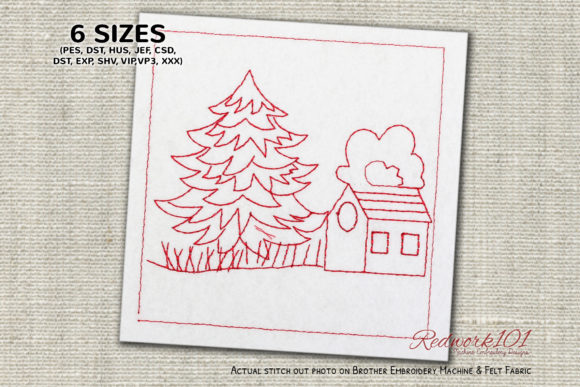
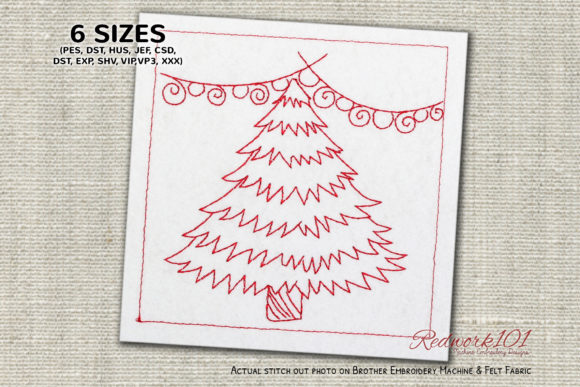
The Decorative Christmas Tree Redwork design strikes a balance between classic holiday charm and the clean, minimal look that many handmade buyers are drawn to this season. It does not rely on heavy shading or dense fill stitches. Instead, the redwork style gives it a hand-drawn, almost folk-art feel that photographs well and reads clearly from a few feet away. This is an important quality for booth display because customers often make decisions from across the aisle before they ever pick up a product.
The optional Box Stitch mentioned in the description adds a nice framing element, but I appreciate that it is not required. Leaving it out keeps the design open and airy, which works well on smaller items. The note about the outer box color being different in most designs tells me that the file includes some flexibility in thread colors, but I would always test my own thread choices before committing to a production run. For a craft fair product, a design that looks both intentional and easy to understand at a glance is a strong starting point.
How This Design Performs on Different Products
When I evaluate a machine embroidery design for resale, I mentally place it on every product I might bring to a market. The Decorative Christmas Tree Redwork adapts well across several categories, which is exactly what a small shop product needs to be profitable.
Tote Bags and Market Bags
A well-placed embroidery design on a tote bag is one of the fastest-selling items at any craft fair. The Decorative Christmas Tree Redwork sits comfortably on a standard tote bag front. The redwork lines are bold enough to stand out against natural cotton or linen, and the tree shape is recognizable from a distance. I would recommend a medium hoop size for this application, large enough to let the tree breathe but not so large that it crowds the bag surface. The optional box stitch can work here as a border, but I tested it without and found the design still feels complete.
Tea Towels and Kitchen Linens
Tea towel embroidery is a staple for holiday markets, and this design fits that product beautifully. The redwork aesthetic pairs naturally with the texture of a woven towel. One thing to watch on tea towels is stitch density. If the design has areas that are too dense, the towel may pucker or the stitches may not sit well against the fabric texture. Based on the description, this design appears to use open redwork lines rather than solid fills, which reduces that risk. I would still test a sample on a scrap towel before stitching a batch.
Aprons and Pillow Covers
For apron embroidery, the Decorative Christmas Tree Redwork works as a centered chest design or a lower pocket accent. The simplicity of the redwork style keeps it from feeling too heavy on a garment. On pillow covers, the design reads as a tasteful seasonal accent rather than a loud holiday statement. This matters for handmade product buyers who want something festive but not overwhelming for their home decor.
Embroidered Patches and Small Pouches
Patches are a popular item at craft fairs because they are low-cost and high-margin. The Decorative Christmas Tree Redwork could be stitched onto a patch background and trimmed for sale as an iron-on or sew-on item. The redwork lines are simple enough that the design remains clear even when reduced to a smaller finished size. Small fabric pouches, caps, and giftable items also benefit from the design's scalability. I would test the design at a smaller hoop size to confirm that the tree details remain crisp.
Practical Selling and Production Points
From a booth display perspective, the Decorative Christmas Tree Redwork has a clean, premium look that does not require a lot of explanation. Customers can immediately see it is a Christmas tree and that it is embroidered. That instant recognition is valuable for an Etsy seller or a booth holder because it reduces the time you spend describing each item.
When it comes to photography for online listings, this design photographs well because the redwork lines create clear contrast against most fabric backgrounds. I always tell my students to stitch one sample and use it for printable mockups and listing photos. A real stitched sample will always look better than a digital rendering, and this design is straightforward enough that a first sample is likely to be usable.
For batch production, the Decorative Christmas Tree Redwork feels repeatable. The stitch count is likely moderate given the redwork style, which means I can stitch multiple units in a session without excessive thread changes or tension adjustments. The optional box stitch adds a step if you choose to include it, but skipping it keeps production fast. I would recommend confirming the exact stitch count and thread colors before ordering stabilizer and thread in bulk for a craft fair run.
Careful-Use Notes for Embroidery Production
Every embroidery file has its quirks, and a good designer learns to spot them before they cause problems on finished products. Here are the considerations I flag for the Decorative Christmas Tree Redwork.
Dense Stitch Areas and Tiny Details
Redwork designs typically use outline stitches rather than dense fills, which reduces the risk of puckering. However, if the tree branches include tight curves or very small details, those areas may become muddy on textured fabrics or at smaller hoop sizes. I would test the design on a medium-weight cotton before moving to heavier materials. If you notice any areas where stitches stack too closely, a small adjustment in your embroidery software can help open up the spacing.
Fabric and Thread Considerations
Dark fabric can be tricky for redwork if the thread color does not pop. The description mentions that the outer box color may differ, which suggests the design includes some color variation. For dark fabric, choose a thread that offers strong contrast. Thick fabrics like towels or fleece may require a heavier stabilizer to keep the stitches even. Curved cap surfaces also demand careful hooping and stabilization to avoid distortion. I always recommend testing on a cap hoop before committing to a production order.
Small Lettering and Fine Details
If the Decorative Christmas Tree Redwork includes any text or small elements, those details may lose clarity at smaller sizes. The redwork style is generally forgiving, but it is worth reviewing the design in your software to see if there are any very thin lines or tiny spaces. If the design is intended for a small pouch or patch, consider whether the details will hold up at that scale.
Visual Appeal, Customer Attention, and Booth Display
At a craft fair, a product needs to catch a customer's eye within three seconds. The Decorative Christmas Tree Redwork accomplishes this through its clear silhouette and the natural appeal of redwork stitching. The design feels festive without being cartoonish, which broadens its appeal across age groups and style preferences. I have seen similar designs sell well in farmhouse-style booths, modern minimalist displays, and rustic holiday setups.
For booth display, I would stitch this design onto a few different product types and group them together. Seeing the same embroidery file on a towel, a tote, and a small pouch shows customers the versatility of the design and often leads to multiple sales. The consistency of the redwork style across products also reinforces brand identity for a small shop product line.
From a handmade quality perspective, the Decorative Christmas Tree Redwork looks like a thoughtful, intentional design rather than a mass-produced graphic. Customers who appreciate handcrafted goods will notice the clean stitch quality and the care taken in placement. That perception of quality directly supports higher price points at markets and on Etsy.
Embroidery Designer Notes Before Production
Before you turn this digital embroidery file into finished products, there are a few practical steps I recommend. First, test the design on scrap fabric using the exact stabilizer and thread you plan to use for your final products. Do not skip this step, even if the design looks perfect on screen. Fabric texture, thread tension, and hoop size all affect the final result.
Check thread contrast by stitching a small sample on light and dark fabrics. The redwork style relies on clean lines, so thread color choice matters. Review the spacing in the design to ensure that open areas do not look accidentally empty and that dense areas do not feel crowded. Confirm that your hoop size matches the design dimensions and that your machine can handle the stitch count without issues.
Create at least one real mockup of the finished product and use it for your booth display and online listings. A sample that customers can touch and inspect will always sell better than a photo alone. Finally, confirm the commercial licensing terms for the embroidery file. Many machine embroidery design files include restrictions on how many finished products you can sell or where you can sell them. Knowing these terms upfront protects your business and your craft fair investment.
Final Thoughts on Decorative Christmas Tree Redwork for Handmade Markets
The Decorative Christmas Tree Redwork is a solid choice for any embroidery business owner who wants to offer a festive, sellable design without overcomplicating production. It works on a wide range of products, photographs well, and holds up to the scrutiny of craft fair customers who appreciate quality stitching. The optional box stitch gives you flexibility, and the redwork style keeps the design approachable for both the maker and the buyer. With proper testing and attention to stabilizer, thread, and hoop size, this design can become a reliable part of your holiday product lineup. I would recommend it to Etsy sellers, boutique makers, and anyone preparing for a busy Christmas market season.